
Overview of Vaults and Wallets
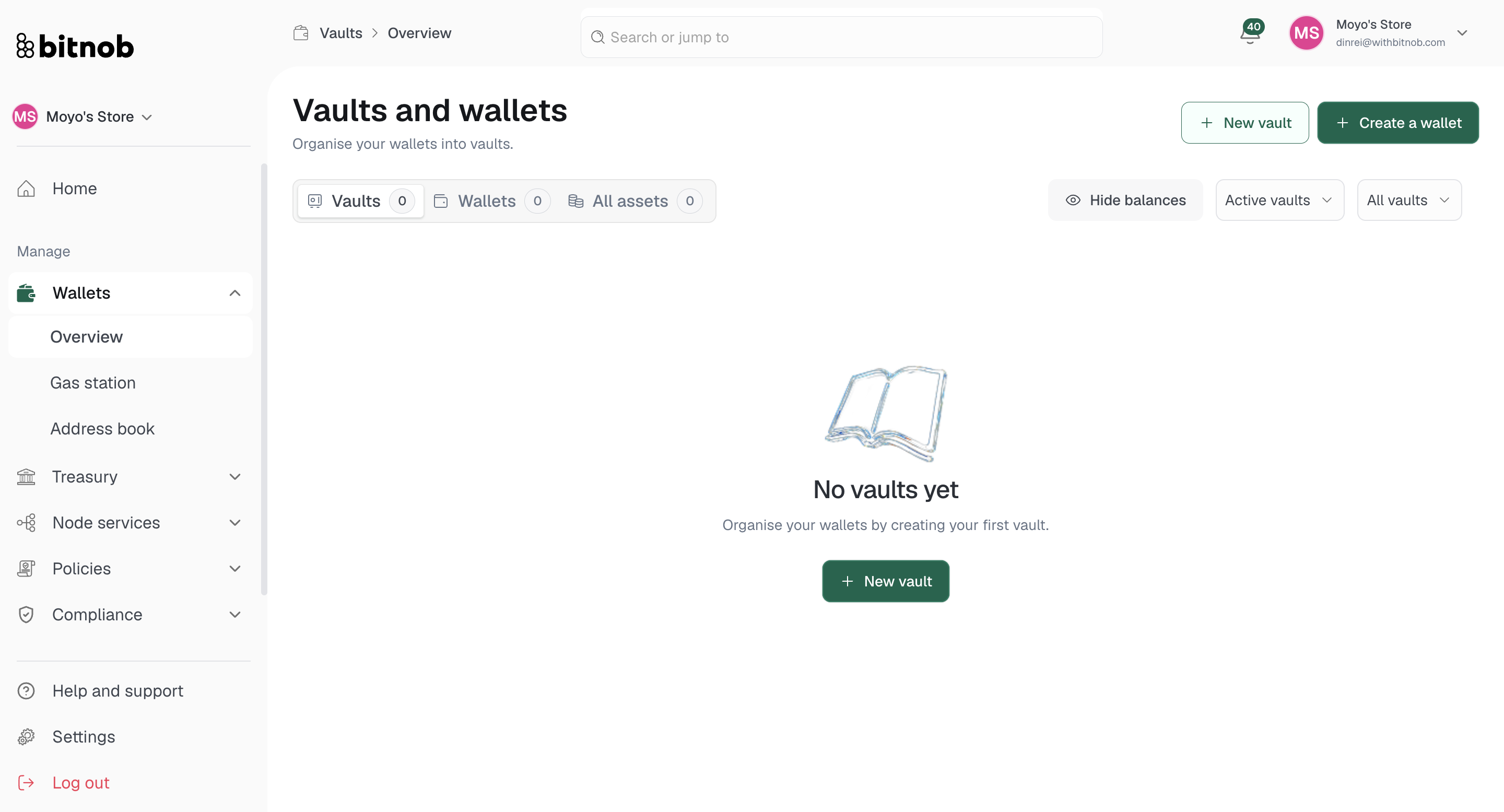
Bitnob Enterprise organises your digital assets using two building blocks; vaults and wallets. Understanding how they relate to each other is the starting point for setting up your wallet infrastructure.
Wallets are individual blockchain addresses that hold a specific asset on a specific chain. Every wallet you create is assigned to a vault.
Vaults are the containers that organize and group your wallets. A vault is an HD (hierarchical deterministic) wallet seed that can derive unlimited blockchain addresses, meaning you can create as many wallets under a single vault as your operations require.
Vault Types
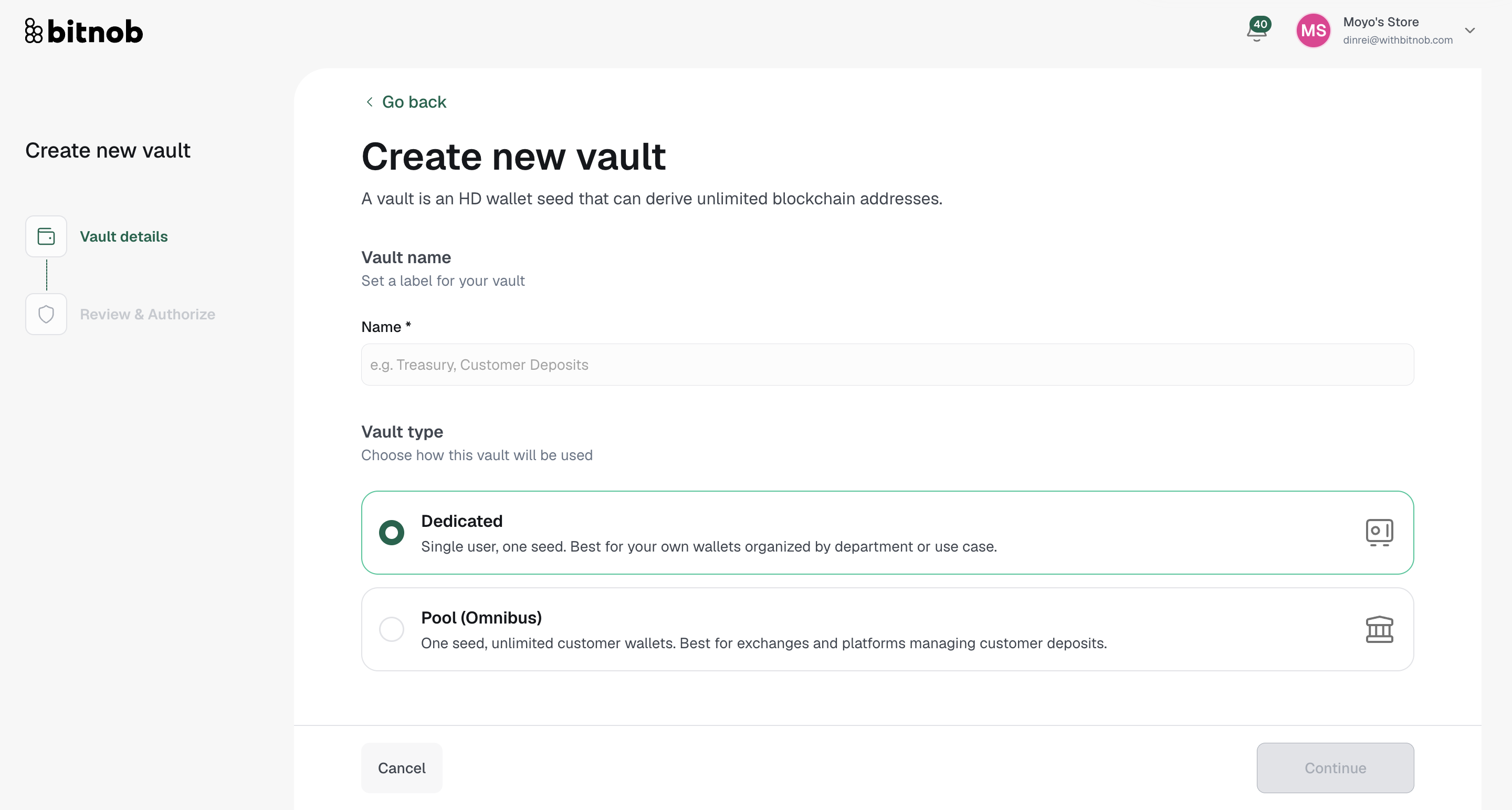
There are two vault types on Bitnob Enterprise:
Dedicated A single-seed vault best suited for your own wallets organized by department or use case — for example, a vault for operations, one for treasury reserves, and one for payroll. Each dedicated vault is isolated and intended for internal use.
Pool (Omnibus) A single-seed vault that supports unlimited customer wallets derived from the same seed. Best for exchanges and platforms that manage customer deposits at scale. Pool vaults are designed for high-volume, multi-user environments.
Supported Assets
When creating a wallet, you can choose from the following assets: Bitcoin (BTC), Ethereum (ETH), Tether (USDT), USD Coin (USDC), Solana (SOL), Tron (TRX), and Polygon (MATIC).
Related Articles